
SMS marketing in four steps – from audience to measurement
Plan relevant SMS marketing with the right audience, focused copy, a mobile-friendly landing page and useful campaign measurement.
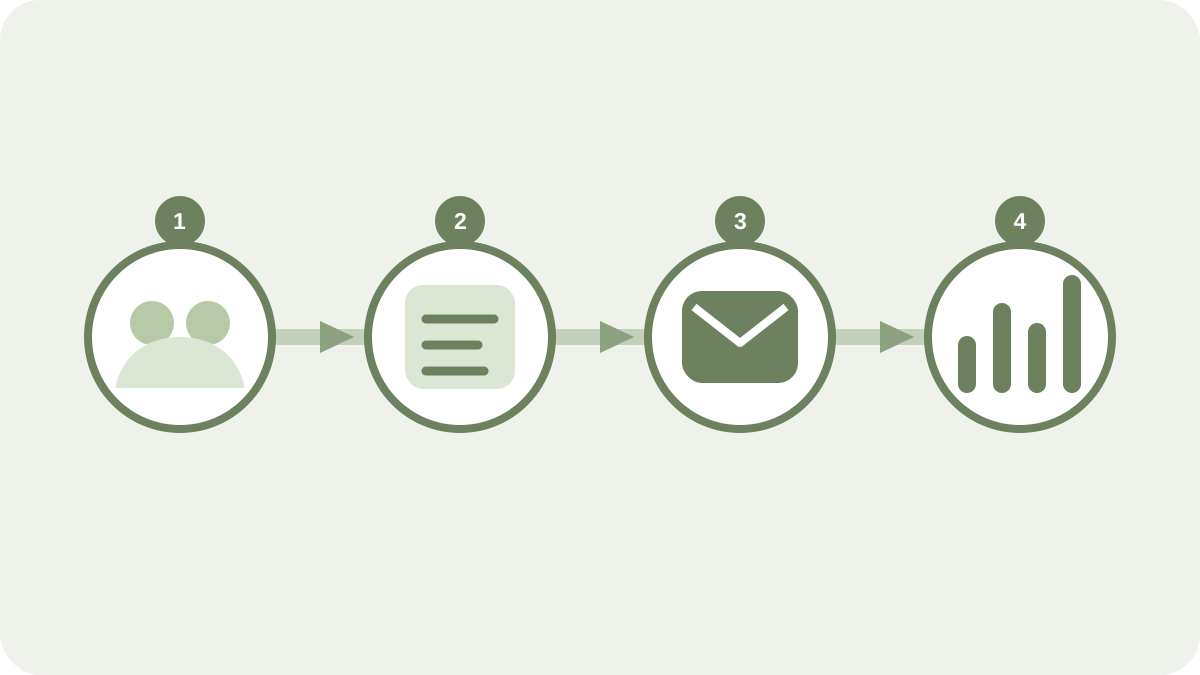
SMS works well when a message needs to be brief, clear and close to the recipient’s next action. A good campaign therefore does not start in the message field. It starts with the audience, the offer and what you want the recipient to do.
Use this four-step workflow to plan the campaign.
1. Start with a relevant audience
Do not send the same message to your entire contact database simply because you can. Select recipients according to the campaign’s purpose, such as:
- customers who bought a particular product,
- members in a particular area,
- people who registered an interest in a category,
- participants who need a reminder,
- customers who explicitly selected SMS as a channel.
Check that the list is current and that suppressed or unsubscribed numbers cannot be included. Read the SMS marketing rules before activating a new audience.
2. Give the message one job
An SMS works best when the recipient quickly understands:
- who is sending it,
- why the message is relevant,
- what to do next.
Choose one primary action, such as Book, Use the offer, Learn more or Confirm your place. Competing calls to action make the message harder to act on.
Put the most important information first. Avoid internal terminology and long introductions. Check the character counter because Unicode characters and emoji can reduce the number of characters available in each SMS segment.
3. Let the link continue the story
The SMS does not need to contain every detail. A short link can lead to a page where the recipient can read the terms, view products, book or respond.
The landing page should:
- work well on a small screen,
- load quickly on a mobile connection,
- continue the same message as the SMS,
- show the offer’s important terms,
- use the same clear action,
- avoid unnecessary steps.
Use trackable short links when you need to measure clicks without making the message difficult to read.
4. Measure what supports the goal
Define the metrics before sending. Clicks matter when an SMS leads to a page, but the campaign’s real objective may be bookings, purchases, replies or completed registrations.
Track relevant measures such as:
- delivered and rejected messages,
- campaign-link clicks,
- completed actions,
- unsubscribes,
- results by audience,
- time and day of sending.
Do not compare campaigns by click-through rate alone. A smaller, well-selected audience can produce a better business outcome than a broad send.
Test before sending the full campaign
Send to an internal test group and check the message on more than one phone. Verify the sender, SMS segments, links, landing page and unsubscribe route.
Use a short final check:
- correct account and sender,
- correct audience,
- correct date and time zone,
- working link,
- clear conditions,
- working unsubscribe route,
- named internal campaign owner.
Bring the campaign together in One Channel
One Channel lets you build audiences, plan SMS and email, create landing pages and track campaigns in one connected workflow.
For a technical introduction to the channel itself, read All about SMS.